
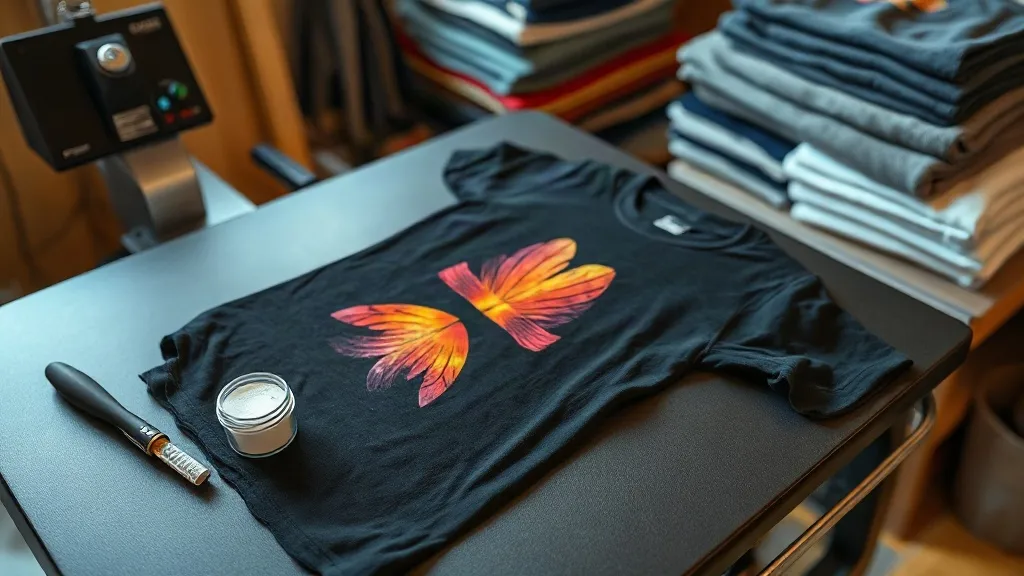
If you run a small apparel or print business, you have probably had a customer hand you a phone with a photo of a design and ask, "Can you put this on a hoodie by Friday?" The fabric is a 50/50 blend, the artwork has fourteen colors and a soft gradient, and the order is three pieces. Screen printing is overkill, vinyl cutting cannot handle the detail, and heat transfer paper tends to crack after a few washes. This is exactly the gap where dtf transfers have become a practical, everyday tool rather than a novelty.
What follows is not a sales pitch. It is a working guide built around the questions that come up in real shops: what the process actually does, where it beats other methods, how to keep quality consistent, and where it will disappoint you if you expect too much. If you are weighing whether to bring dtf into your workflow, or you already own a printer and want fewer reprints, this should help.
What a DTF Transfer Actually Is
Direct to film is a printing method with three moving parts: a printer, a sheet of film, and a powder. The printer lays down water-based pigment inks onto a coated PET film in mirror image. While the ink is still wet, a thermoplastic polyurethane powder is applied across the printed area and shaken off the unprinted parts. The film then goes through a curing step, usually a heat press or a dedicated powder shaker and oven, where the powder melts and bonds with the ink. What you end up with is a flexible, stretchy transfer film you can store flat and press onto a garment weeks later.
The important detail is that the powder, not the ink alone, becomes the adhesive. That is why a properly cured transfer holds up on cotton, polyester, blends, and even some nylon and canvas. It is also why undercured transfers fail in the wash: the powder never fully melted, so there was nothing for the fibers to grip.
Film, powder, and press: the three variables that matter
Most quality complaints trace back to one of these three. Film choice affects how the ink releases and how the final hand feel comes out. Powder grade and particle size affect stretch and wash durability. Press settings affect everything. A shop that dials in all three can produce transfers that survive fifty-plus washes; a shop that guesses will see edges lift within a week.
Where DTF Transfers Beat the Alternatives
The honest answer is: in the middle of the market. Very large runs still belong to screen printing on cost per unit. Single-color text on a cotton tee is still fastest with vinyl. But a huge share of real customer orders sit in the awkward middle, and that is where film shines.
- Full-color artwork without color separation. Gradients, photographic images, and designs with more than six colors print in one pass. No screens, no per-color setup fees.
- Blend and synthetic fabrics. Sublimation needs high polyester content and light colors. DTF works on dark 100% cotton and on poly blends that sublimation cannot touch.
- Low minimums. One-offs and short runs are economically sensible because there is no setup cost beyond printing the film.
- Storage and repeat orders. Cured transfers keep for months if stored away from heat and moisture, so you can print a batch once and press as orders arrive.
- Hard-to-print placements. Sleeves, pockets, neck labels, and small left-chest logos are simpler because the transfer is flexible and thin at the edges.
Where it loses: large solid blocks of white or black ink can feel heavier than screen print, and the per-unit cost stays flat no matter how many you produce. If a customer orders 500 identical one-color tees, screen printing will win on price every time.
Matching DTF to the Right Fabric and Garment
DTF is often described as universal, which is close to true but not quite. Cotton and cotton-rich blends are the safest bet and give the softest result. Polyester works well, though very smooth, tightly woven performance poly can show slightly crisper edges and a bit more sheen. Nylon and canvas take the transfer but benefit from a longer, firmer press. Coated or water-repellent fabrics are the usual problem case, because the coating can prevent the powder from anchoring into the fiber.
There is also a color consideration. DTF ink is opaque, so it prints on dark garments without a white underbase step, but very thin designs on very dark fabrics can look slightly muted compared to a screen-printed white. For light garments, the white layer in the transfer is still there, which is why a small design on a white tee sometimes feels a touch thicker than expected. Adjusting the white ink density in your RIP software solves most of this.
Garment prep that saves reprints
Two minutes of prep prevents most adhesion failures. Pre-press the garment for a few seconds to drive out moisture, especially with heavyweight hoodies and canvas. Let it cool slightly before pressing the transfer, and make sure seams, zippers, and buttons are not sitting under the platen. A pressing pillow under the garment helps on hoodies, totes, and anything with a thick seam.
Press Settings and the Wash Test That Tells the Truth
Every film and powder combination has its own sweet spot, but a reasonable starting point for most shops is a press at around 150 to 160 degrees Celsius, medium to firm pressure, and eight to twelve seconds for the press cycle. Peel cold or warm depending on the film manufacturer's instructions; cold peel is more common with DTF because it lets the ink and powder cool and set before the carrier is removed.
After peeling, a short second press of five to eight seconds under a protective sheet or parchment improves the bond and flattens the texture. This step is skipped surprisingly often, and it is one of the cheapest quality upgrades available.
The only test that matters is the wash test, and it needs to be done properly. Press a sample, wait 24 hours, then wash it inside out in a normal cycle with detergent, and tumble dry on medium. Repeat five times and inspect the edges. If the transfer starts lifting at the corners, your pressure is probably too low or your press time too short. If the design feels stiff and cracked, you are likely over-pressing or over-curing the film.
Common failure modes and what they usually mean
- Edges lift after washing: insufficient pressure, uneven platen, or powder that was not fully cured.
- Patchy, grainy adhesion: too little powder applied, or powder shaken off too aggressively.
- Ink cracking: over-curing during the film stage, or pressing at too high a temperature.
- Transfer sticks to the carrier sheet: film was peeled too hot, or the film was stored in a humid space.
- Color looks dull on dark fabric: white ink layer too thin in the print settings.
Buying Transfers vs. Printing In-House
Not every shop needs a printer. If your volume is a few dozen pieces a week, ordering transfers from a supplier is often cheaper than buying a printer, a shaker, and a press upgrade, and it removes the learning curve entirely. The trade-off is turnaround time and the loss of control over color and film quality.
Printing in-house starts to make sense when you are pressing most days, when customers expect same-day service, or when you need to iterate on artwork quickly. A useful middle step is to buy transfers for your standard jobs while you learn the process, then invest in equipment once the workflow and demand are proven. Shops that jump straight to full in-house production often underestimate the space, ventilation, and powder management involved.
If you are sourcing rather than printing, it pays to compare local options before committing to a single supplier. Searching for dtf transfers near me is a reasonable starting point, but check more than price: ask about film brand, powder grade, turnaround, and whether they will send a sample for you to wash test before you place a large order.
Pricing and Positioning Your DTF Work
Because there is no setup cost, pricing should reflect garment cost, transfer cost, labor, and a margin that accounts for the occasional reprint. A simple approach is to set a flat price per placement size band (small chest logo, medium front, large back) rather than pricing per color. Customers understand it instantly, and it protects you from underpricing complex artwork.
Positioning matters too. DTF lets you say yes to orders that other shops turn away, and that reputation compounds. Small businesses, sports teams, schools, and event organizers care more about speed and flexibility than about the theoretical superiority of one print method. Being the shop that handles the awkward order well is a genuine competitive advantage.
Frequently Asked Questions
How long do DTF transfers last on a garment?
A properly cured and correctly pressed transfer typically holds up for the life of the garment under normal washing. In practice, most failures come from pressing errors rather than the transfer itself, which is why a wash test on your own equipment is worth more than any manufacturer claim.
Can DTF transfers be applied to 100% polyester?
Yes, and this is one of the method's strengths. Polyester and poly blends press well, though very smooth performance fabrics can show slightly sharper edges. Lower the press temperature a little on heat-sensitive synthetics and always test a sample first.
How should I store unused transfers?
Keep them flat, away from direct heat, sunlight, and humidity. A dry drawer or a sealed bag at room temperature is fine. Avoid leaving them in a hot car or near a press, because heat can partially activate the powder and make the film difficult to peel later.
Do I need a special heat press for DTF?
A standard swing-away or clamshell press with reliable temperature and pressure control is enough. What matters more than the brand is consistency: a press that holds temperature and applies even pressure across the platen will outperform a bigger machine that runs hot and cold.
Is DTF cheaper than screen printing?
For small and medium runs, usually yes, because there are no screens or setup fees. For large runs of the same design, screen printing becomes cheaper per unit as volume climbs. The crossover point depends on your costs, so calculate it with your own numbers rather than assuming.
The takeaway is straightforward. DTF is not a replacement for every method, but it fills a wide, useful space that most small shops deal with every week. Get the powder, press settings, and wash testing right, and it becomes one of the most reliable tools in your production lineup.