
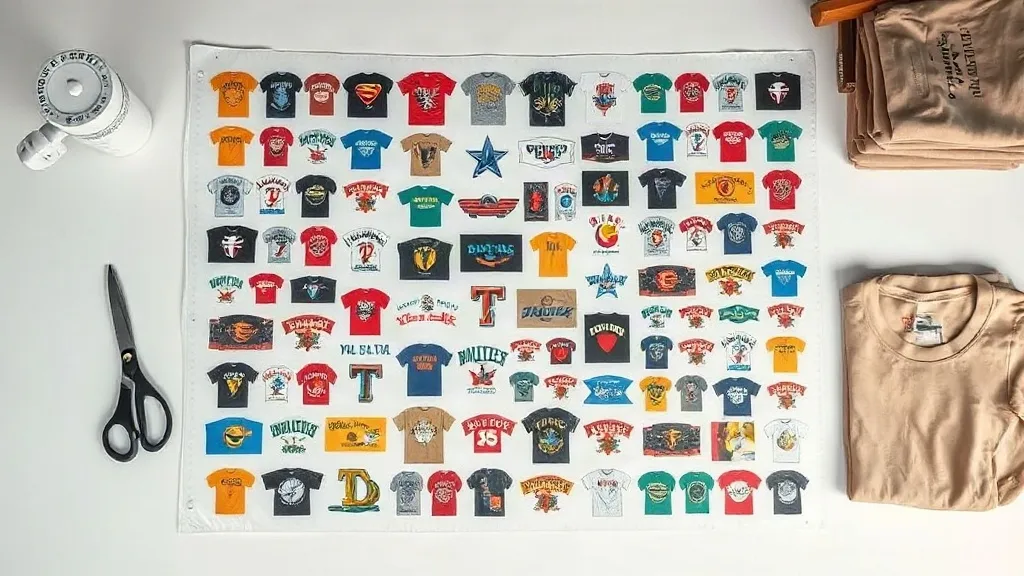
Most print shops lose money in the gaps, not in the printing itself. Changing film, reloading a file, re-trimming a design, waiting for the platen to cool: these small interruptions add up to hours every week. A DTF Gangsheet exists to close those gaps. Instead of sending one design at a time, you pack many jobs onto a single sheet of film, print them together, and powder and cure them in one pass. The result is fewer machine cycles, less wasted material, and a production rhythm that feels calm instead of frantic.
This guide is written for people who actually run the equipment: small apparel brands, print-on-demand sellers, and shop owners who are tired of watching half-used film roll into the bin. We will cover how to lay out a sheet that maximizes yield, how to group jobs so nothing gets held hostage by a single slow order, and the habits that separate a profitable gangsheet operation from one that just looks busy.
What a DTF Gangsheet Actually Is
Direct-to-film printing transfers a design onto a PET film, then coats the wet ink with adhesive powder, cures it, and presses it onto fabric. A gangsheet is simply the practice of arranging multiple designs on one continuous piece of film rather than printing them individually. The concept is old, borrowed from gang-run printing in offset and screen work, but DTF makes it especially practical because the film is flexible, the designs can be nested tightly, and the whole sheet cures in one trip through the oven.
The economics are straightforward. Film, powder, and ink are consumed in proportion to area, but labor and machine time are consumed per job. A gangsheet collapses ten jobs into one setup, so your fixed costs spread across more output. If a single 13x19 inch transfer takes four minutes of handling, ten of them take forty. Printed as one sheet, the same volume might take twelve minutes of handling plus a longer print pass. That difference is where margin lives.
Why the Sheet Size Matters More Than You Think
Most DTF printers ship with a standard film width, often 13, 17, or 24 inches, and the sheet length is effectively limited only by your roll. That means you can build a sheet that is short and dense or long and sprawling. Short, dense sheets are easier to handle and less likely to jam, but they require more frequent reloads. Long sheets amortize setup better but demand careful registration and a clean workspace so the film does not pick up dust or crease.
In practice, a sheet between 20 and 40 inches long is the sweet spot for most small shops. It is long enough to hold a meaningful batch, short enough that one person can carry and powder it without help, and it fits comfortably on a standard curing setup.
How to Lay Out a Sheet That Wastes Nothing
Layout is where a gangsheet earns or loses its reputation. The goal is not to fill every square inch. The goal is to fill every square inch with something you can actually sell. A sheet packed with test prints and half-finished ideas looks efficient and is not.
Start With Real Orders, Not Hypotheticals
Build your sheet from orders you already have, then fill the remaining space with proven bestsellers. This is the single most important habit. Shops that design their gangsheet around speculative designs end up with drawers full of transfers that never sell. Shops that build around confirmed demand end up with almost no leftover space at all.
Keep a running queue of pending orders and pull from it when you are ready to print. If the queue is thin, add your two or three highest-velocity designs. Those will move eventually, and they cost nothing extra to include once the sheet is already running.
Nest Aggressively but Respect the Cut Line
DTF designs need a small border so the powder does not bridge between adjacent prints. A gap of roughly 3 to 5 millimeters is enough to keep edges clean while still allowing tight nesting. Rotate designs where the shape allows it, especially long banners and script lettering, and tuck small items into the negative space around larger ones.
Watch the corners. Rounded or irregular shapes leave pockets of empty film that are perfect for small logos, pocket prints, and sleeve designs. Those small items are often the highest-margin products you sell, and they cost almost nothing when they fill space that would otherwise be discarded.
Group by Fabric and Finish
It is tempting to print everything together, but grouping matters. Designs destined for dark garments and designs for light garments may need different powder application or press settings. Keeping similar jobs together on the same sheet, or at least in the same batch, reduces the chance of a mis-pressed transfer and makes quality checks faster.
- Group by garment color so press temperature and dwell time stay consistent.
- Group by design size so trimming and sorting go quickly.
- Keep rush orders on their own short sheet rather than holding up a large batch.
- Separate delicate fine-line art from heavy solid fills that need more powder.
The Mistakes That Quietly Eat Your Margin
Most gangsheet problems are not dramatic. They are small, repeatable losses that nobody notices until the monthly numbers come in.
Overfilling the Sheet
Cramming designs edge to edge feels efficient, but it increases the risk of powder contamination along cut lines and makes trimming slower. A sheet that is 90 percent full and easy to process beats a sheet that is 100 percent full and produces reprints.
Ignoring Film Orientation
PET film has a grain, and designs printed against it can curl or misalign during pressing. Keep your film orientation consistent across the sheet, and store rolls upright so they do not develop a set curve that fights you during printing.
Skipping the Print Log
Every gangsheet should have a record: what was on it, when it printed, what settings were used, and how many units sold. Without that log, you cannot tell which layouts actually performed. A simple spreadsheet is enough. After a month, patterns emerge, and you will know exactly which design combinations and sheet lengths work best for your shop.
Letting Powder Sit Too Long
Once a sheet is powdered, the clock starts. Humidity and time both degrade adhesion. Powder and cure promptly, and avoid building a sheet you cannot finish in the same session. A partially cured sheet is a wasted sheet.
Building a Repeatable Workflow
The shops that get the most from gangsheets treat them as a process, not a one-off decision. They queue orders through the week, close the queue at a set time, build the sheet, print, powder, cure, and sort in a single block. That block becomes a ritual, and rituals are what turn a chaotic shop into a predictable one.
Start with one batch per week. Measure how long it takes from file prep to sorted transfers. Then tighten the layout, adjust the sheet length, and watch the time drop. Most shops find that after four or five cycles, the same volume takes noticeably less time, not because the printer got faster, but because the sheet got smarter.
Frequently Asked Questions
How many designs can fit on one DTF gangsheet?
It depends entirely on design size and sheet dimensions. A 13x19 inch sheet might hold a dozen small pocket logos or two large back prints. The practical limit is set by your cut-line spacing and how much trimming you are willing to do, not by the printer itself.
Is it cheaper to print a gangsheet or individual transfers?
For most shops, a gangsheet is cheaper per unit because labor and machine setup are shared across many designs. The savings shrink if the sheet is poorly nested or filled with designs that do not sell, so layout discipline matters as much as the batching itself.
Can I mix different garment colors on the same sheet?
You can print them together, but you should sort and press them separately. Different fabric colors often need different press settings, and mixing them on one sheet increases the chance of a mis-press. Print together, press in groups.
How long can a gangsheet be before it becomes hard to handle?
Once a sheet passes roughly 40 inches, handling gets awkward for one person and the risk of creasing or contamination rises. Longer sheets are possible, but they usually make more sense for shops with two operators or an automated powdering setup.
What is the biggest cause of wasted film on a gangsheet?
Speculative designs. Film wasted on transfers that never sell is the most common and most expensive loss. Build sheets from confirmed orders first, then fill remaining space with proven bestsellers, and the waste mostly disappears.