
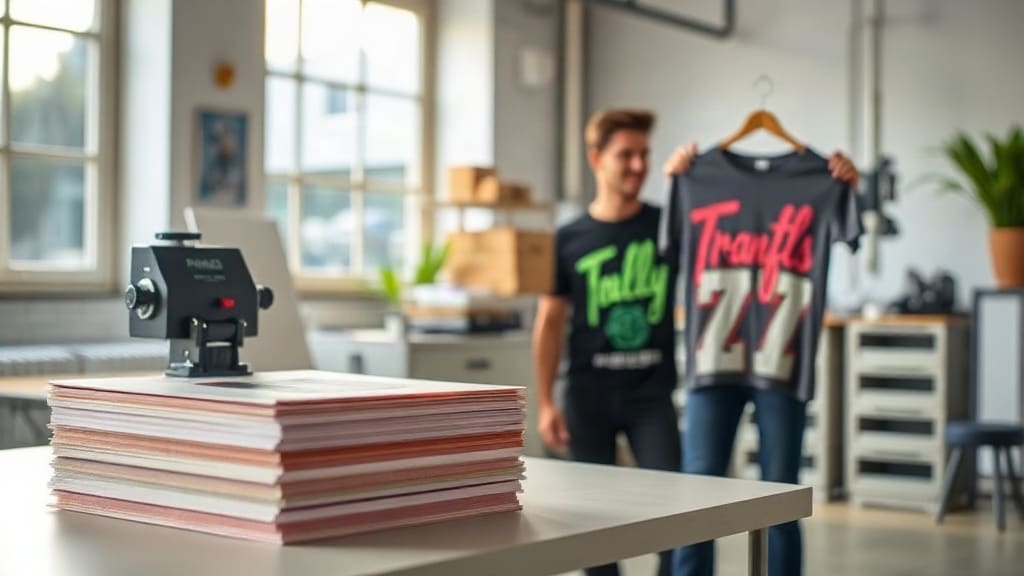
If you're searching for dtf printing services, you've likely realized that not all providers are created equal. Whether you're a small business owner, a hobbyist, or someone wanting to create custom shirts for an event, finding a trustworthy local source can be a game-changer. The convenience of picking up your order, seeing the quality firsthand, and avoiding shipping delays makes the "near me" approach appealing. But what exactly should you look for? And how do you avoid costly mistakes? This guide will walk you through everything you need to know about choosing a local dtf transfers provider, from understanding the process to evaluating quality and ensuring your designs come out perfect.
What Are DTF Transfers?
DTF, or Direct to Film, is a printing method where a design is printed onto a special film, coated with adhesive powder, and then heat-pressed onto fabric. Unlike traditional screen printing, DTF doesn't require screens or extensive setup, making it ideal for small batches and full-color designs. The transfer can be applied to cotton, polyester, blends, and even hard surfaces like mugs or wood. This versatility has made DTF extremely popular in the custom apparel industry.
When you order dtf transfers, you receive printed sheets or rolls that you can apply yourself with a heat press. This is different from ordering a finished shirt. Many people prefer this because it gives them control over application and allows them to produce items on-demand.
Why Look for DTF Transfers Near Me?
There are several reasons why you might prioritize a local provider:
- Speed: No waiting days for shipping. You can pick up your order or get it within a day or two.
- Quality Check: You can physically inspect samples before committing to a large order.
- Customer Service: Face-to-face interaction often leads to better communication and support.
- Support Local Business: You're helping your local economy thrive.
However, "near me" doesn't automatically mean the best. You still need to do your homework to ensure you're getting high-quality transfers at a fair price.
How to Find Reliable DTF Transfer Providers in Your Area
Start with a simple online search using the phrase dtf transfers near me. But don't stop at the first result. Here are some practical steps to narrow down your options:
1. Read Reviews and Ask for References
Look for providers with consistent positive reviews. Pay attention to comments about print quality, color accuracy, and durability. Don't hesitate to ask for references from other local businesses that use their services. A reputable provider will gladly share success stories.
2. Evaluate Their Portfolio
Ask to see samples of their work, especially on the type of fabric you plan to use. Look for crisp edges, vibrant colors, and no cracking after washing. If they can't show you physical samples, be cautious.
3. Check Their Equipment and Inks
Quality DTF transfers depend on the printer, film, powder, and ink used. Ask what type of printer they use and whether they use genuine, high-quality inks. Cheap inks can lead to faded prints and poor washability.
4. Compare Pricing Structures
Pricing for DTF transfers typically depends on size, quantity, and complexity. Some providers charge per square inch, while others have setup fees. Get quotes from multiple places and compare. But remember: the cheapest option isn't always the best value. A slightly higher price might be worth it for better quality and reliability.
5. Test Their Customer Service
How quickly do they respond to your inquiries? Are they helpful and knowledgeable? Good communication is a sign of a professional business. If they're unresponsive before you place an order, they'll probably be worse after.
Red Flags to Avoid When Choosing a DTF Transfer Provider
Not every local printer is a good fit. Watch out for these warning signs:
- No samples: They can't provide physical examples of their work.
- Vague details: They can't explain their process or materials.
- Unbelievably low prices: If it seems too good to be true, it probably is. Extremely cheap transfers may use inferior materials that crack or peel after a few washes.
- Poor communication: They take days to reply to emails or phone calls.
- No return policy: They don't stand behind their product.
How to Prepare Your Designs for DTF Transfers
Once you've chosen a provider, you need to get your designs ready. This is where many people make mistakes. Here are some tips to ensure your transfers come out perfect:
1. Use High-Resolution Images
Always provide images with at least 300 DPI. Low-resolution images will result in pixelated prints. If you're unsure about your file quality, ask your printer for advice. They can often tell you if a design will work.
2. Understand Color Profiles
DTF printing uses CMYK color mode. If you're designing in RGB, your colors may shift. Use a color conversion tool or ask your provider to handle color management. For accurate colors, request a physical proof before mass production.
3. Mind the Details
Very small text (less than 8-10 pt) can be problematic. Fine lines might not transfer cleanly. Simplify your design if needed. Also, keep in mind that white ink is used as a base, so designs with white areas should be properly formatted to avoid extra costs.
4. Include a Cutting or Contour Line
If you're ordering kiss-cut transfers, you need to specify the contour. Most providers will ask for a cut file (like a vector path) or they can create one for an additional fee. Be clear about your requirements.
Applying DTF Transfers: The Right Way
Even the best transfer will fail if applied incorrectly. Here are the key steps for a successful application:
- Pre-press your garment: Press the shirt for 3-5 seconds to remove wrinkles and moisture.
- Position the transfer: Place the film with the design facing down on the garment.
- Use a heat press: Set the temperature according to the provider's recommendation (usually around 300°F to 320°F). Apply medium pressure for 10-15 seconds.
- Peel warm or cold: Some films peel hot, others cold. Follow the instructions provided. If unsure, peel warm (about 30-60 seconds after pressing) for most designs.
- Re-press if needed: If any edges are loose, press again for a few seconds.
Always test on a sample garment first. This helps you adjust temperature and pressure before applying to your final product.
Maintaining Your DTF Transfers
Proper care extends the life of your prints. Wash garments inside out in cold water, avoid bleach and fabric softeners, and hang dry or tumble dry low. With correct application and care, DTF transfers can last for many washes without cracking.
Cost Considerations for DTF Transfers
The cost of DTF transfers varies widely based on your location and the provider. Generally, you'll pay more per square inch for small quantities. As you order more, the price drops. Also, full-color designs with intricate details may cost more than simple one-color prints. Always ask for a detailed quote so you know exactly what you're paying for.
Environmental and Sustainability Aspects
If you're environmentally conscious, ask about the inks and materials used. Some providers use eco-solvent or water-based inks that are less harmful. Also, DTF produces less waste than screen printing when it comes to setup, but the film and powder are not biodegradable. Some companies offer recycling programs for used film. Do your part by choosing a provider that minimizes waste.
Frequently Asked Questions
How much do DTF transfers cost?
Pricing depends on size and quantity. On average, a standard 8x10 inch transfer might cost around $1 to $3 each in small quantities. Ordering in bulk reduces the price significantly. For exact pricing, get quotes from local providers.
Can DTF transfers be applied to any fabric?
DTF works well on cotton, polyester, blends, and even nylon. However, for very stretchy fabrics like spandex, you need a special stretchable adhesive. Always check the fabric's composition and ask your provider if they have a suitable transfer.
How long do DTF transfers last?
With proper application and care, DTF transfers can last for 50+ washes without fading or cracking. The key is to follow the recommended application instructions and use quality materials.
Do I need a heat press to apply DTF transfers?
Yes, a heat press is essential for applying DTF transfers. While a home iron might work temporarily, it doesn't provide even pressure or consistent temperature, leading to poor adhesion and durability. Invest in a good heat press for professional results.
Can I use DTF transfers on dark shirts?
Absolutely. DTF transfers are excellent for dark garments because they include a white ink base that makes colors pop. Just ensure your design is printed with the correct white layer.
Conclusion
Finding the right dtf transfers near me can elevate your custom apparel game. By taking the time to research local providers, understanding the process, and preparing your designs properly, you'll get vibrant, long-lasting transfers that impress your customers or wow your event attendees. Remember to compare options, ask for samples, and always test before mass production. With a reliable local partner, you'll enjoy the convenience and quality that DTF printing offers. So start your search today, and take your custom printing to the next level.