
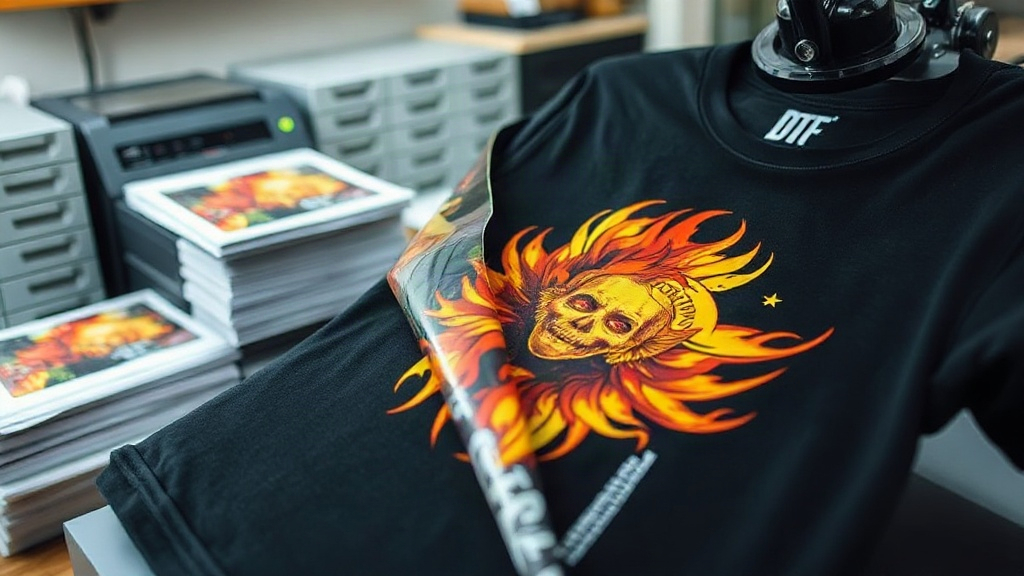
If you've been exploring custom apparel printing, you've likely encountered DTF Transfers. This innovative technology is rapidly gaining popularity among hobbyists and professionals alike, offering a versatile and cost-effective way to bring vibrant designs to life on various fabrics. Unlike traditional methods that can be limiting, DTF transfers open up a world of possibilities for creating detailed, full-color prints with remarkable durability.
In this guide, we'll walk you through everything you need to know about DTF transfers: what they are, how they work, their advantages, and practical steps to apply them successfully. Whether you're a small business owner, a craft enthusiast, or simply curious about custom printing, this article will equip you with the knowledge to harness the power of DTF transfers.
What Are DTF Transfers?
DTF stands for Direct to Film. It's a printing method where your design is printed onto a special film, coated with a adhesive powder, and then heat-pressed onto fabric. The process involves a specialized printer that uses water-based inks to print the design onto a PET film. After printing, a hot melt adhesive powder is applied to the wet ink, and the film is cured. The resulting transfer can then be stored and used later, or immediately applied to garments using a heat press.
This method differs from DTG (Direct to Garment) printing, where the ink is printed directly onto the fabric. DTF transfers separate the printing and application steps, offering greater flexibility. You can print designs in bulk, store them, and apply them on demand. This makes DTF transfers ideal for small businesses that want to offer custom products without investing in a DTG printer.
How DTF Transfers Work: A Step-by-Step Overview
Understanding the DTF process helps you appreciate its capabilities. Here's a simplified breakdown:
- Design Preparation: Create or obtain a digital design. It's crucial to mirror the image horizontally before printing, as the transfer will be flipped when applied.
- Printing: Load the PET film into a DTF printer. The printer lays down a layer of white ink (for opacity) followed by CMYK inks to create the full-color image. Some printers also print a clear adhesive layer.
- Powdering: While the ink is still wet, the film is covered with a hot melt adhesive powder. The powder sticks to the ink.
- Curing: Excess powder is shaken off, and the film is heated to melt the powder, creating a smooth, adhesive surface. This step is critical for durability.
- Transfer Application: The cured film is placed onto the fabric and heat-pressed. The adhesive melts, bonding the ink to the fabric. After cooling, the film is peeled away, leaving the design.
Each step requires attention to detail, but with practice, you can achieve professional results.
Why Choose DTF Transfers? Key Benefits
DTF transfers have surged in popularity for several compelling reasons. Let's explore the main advantages that set them apart from other printing methods.
1. Versatility Across Fabric Types
One of the biggest draws of DTF transfers is their ability to adhere to a wide range of materials. Unlike DTG, which works best on 100% cotton, DTF can be applied to cotton, polyester, blends, and even treated nylon and leather. This makes it a go-to solution for printing on various garments, including t-shirts, hoodies, tote bags, and more. Whether you're working with dark or light fabrics, DTF transfers deliver vibrant colors and fine details.
2. No Pretreatment Required
DTG printing often requires pre-treating the garment to ensure the ink bonds properly, especially on dark colors. DTF transfers eliminate this step. The adhesive powder and the film itself handle the bonding, so you can skip the pretreatment process. This saves time, reduces costs, and simplifies workflow, making DTF an attractive option for beginners.
3. Cost-Effective for Small Runs
For small businesses or individuals producing limited quantities, DTF transfers are highly economical. You can print multiple designs on a single film, store them, and use them as needed. There's no minimum order quantity, and you avoid the setup costs associated with screen printing. This makes DTF perfect for personalized items, sample production, or on-demand printing.
4. High Durability and Washability
When applied correctly, DTF transfers are incredibly durable. The prints resist cracking, peeling, and fading, even after multiple washes. The adhesive powder creates a strong bond with the fabric, ensuring the design stays put. Proper care, such as washing inside out in cold water and avoiding harsh detergents, will extend the life of the print.
5. Detailed and Full-Color Graphics
DTF printers can reproduce intricate details, gradients, and photographs with stunning accuracy. The combination of white ink and CMYK allows for vibrant colors on any background. Whether you need fine lines or bold blocks of color, DTF transfers handle it all with ease.
DTF Transfers vs. Other Printing Methods
To fully appreciate DTF, it helps to compare it with other common printing techniques.
DTF vs. DTG
DTG prints directly onto the garment, which limits it primarily to cotton fabrics. It often requires pretreatment, and the print may feel embedded in the fabric. DTF, on the other hand, works on almost any fabric, doesn't need pretreatment, and produces a slightly raised print that sits on top of the fabric. DTF transfers also allow for printing on dark colors without a white underbase, as the white ink is part of the transfer.
DTF vs. Screen Printing
Screen printing is cost-effective for large orders but requires separate screens for each color, making it expensive for multi-color designs and small batches. DTF transfers are digital, so there's no setup cost per color. They are ideal for small to medium runs and complex designs. However, for very large quantities, screen printing may still be more economical.
DTF vs. Vinyl
Heat transfer vinyl (HTV) is great for simple designs but limited in color and detail. Layering multiple colors can be time-consuming. DTF transfers can produce full-color images in one press, saving time and allowing for more intricate artwork.
How to Apply DTF Transfers: A Practical Guide
Applying DTF transfers is straightforward if you follow the right steps. Here's a detailed guide to help you achieve professional results.
What You'll Need
- DTF transfer film with your design
- Heat press (or a home iron with caution)
- Garment (preferably pre-pressed to remove moisture)
- Heat-resistant tape (optional)
- Parchment paper or Teflon sheet
Step-by-Step Application
- Preheat the Garment: Set your heat press to the recommended temperature (usually 300-325°F or 150-160°C). Pre-press the garment for a few seconds to remove wrinkles and moisture.
- Position the Transfer: Place the DTF transfer face down onto the garment. Ensure it's positioned correctly. You can use heat-resistant tape to hold it in place.
- Press: Cover with parchment paper or a Teflon sheet. Press with medium to firm pressure for 10-15 seconds. The exact time and temperature may vary depending on the film and adhesive, so always check the manufacturer's instructions.
- Peel: After pressing, allow the transfer to cool completely before peeling off the film. This is a "cold peel" process. Peel slowly and evenly.
- Post-Press (Optional): For added durability, you can press the design again for a few seconds with a cover sheet. This ensures the adhesive fully sets.
Practice on a scrap piece of fabric first to dial in your settings. Different fabrics and transfers may require slight adjustments.
Common Challenges and How to Overcome Them
Even with the best practices, you might encounter issues. Here are some common problems and their solutions.
Transfer Not Adhering Properly
If the transfer peels off, it could be due to insufficient pressure, incorrect temperature, or not enough time. Increase pressure and ensure the temperature is accurate. Also, make sure the garment is free of moisture and wrinkles.
Design Cracking or Fading
Cracking often results from under-curing the adhesive powder or over-stretching the fabric. Ensure the transfer is properly cured and follow care instructions. Wash garments inside out in cold water and avoid bleach.
Film Peeling Off Before Pressing
If the film curls or peels before pressing, it might be due to high humidity or improper storage. Store transfers in a cool, dry place and use them within a reasonable time.
Tips for Success with DTF Transfers
- Choose Quality Supplies: Invest in good DTF film, powder, and inks. Cheap supplies can lead to poor results and frustration.
- Test Your Settings: Every heat press is different. Always do a test press to find the optimal temperature, pressure, and time.
- Mirror Your Design: Remember to flip your image horizontally before printing. This is a common mistake for beginners.
- Store Transfers Properly: Keep unused transfers in a sealed bag away from moisture and direct sunlight.
- Practice Makes Perfect: Don't be discouraged by initial failures. With practice, you'll master the process.
Frequently Asked Questions About DTF Transfers
What fabrics can I use with DTF transfers?
DTF transfers work on a wide range of fabrics, including cotton, polyester, cotton-poly blends, and even some synthetic materials like nylon and leather. They are especially good for dark and colored fabrics because the white ink layer provides opacity.
How long do DTF transfers last?
With proper application and care, DTF transfers can last as long as the garment itself. They are durable and resistant to cracking and fading. Wash the garment inside out in cold water and avoid harsh chemicals to maximize longevity.
Do I need a special printer for DTF transfers?
Yes, DTF printing requires a dedicated DTF printer that uses water-based inks and can handle PET film. However, you can also purchase pre-printed DTF transfers from suppliers and apply them with a heat press, which is a great option if you don't want to invest in a printer.
Can I apply DTF transfers with a home iron?
While it's possible to use a home iron, it's not recommended because achieving consistent pressure and temperature is difficult. A heat press is strongly advised for professional and durable results.
What is the difference between DTF and DTG?
DTF (Direct to Film) involves printing on a film and then transferring to the garment, while DTG (Direct to Garment) prints directly onto the fabric. DTF works on more fabric types and doesn't require pretreatment, whereas DTG is primarily for cotton and often needs pretreatment.
How do I store DTF transfers?
Store DTF transfers in a cool, dry place, away from direct sunlight and moisture. Keep them in a sealed bag or container to prevent dust and humidity from affecting the adhesive. Use them within a few months for best results.